.png)

2025 Impact Report
2025 was a year of growth and strengthening for Lion Landscapes, both in terms of organisational structure and on-the-ground impact. We are incredibly proud of every one of our team, who deliver amazing conservation every single day. We are also so grateful to the local communities and other stakeholders that work with us year after year, and the people around the world who support us and share our work.
Introduction
The future of wildlife will not be decided in remote wilderness areas alone, but in the places where people and animals live side by side. Globally valued species such as lions, leopards, and other large carnivores depend heavily on the lands where people live and graze livestock. While the world celebrates these animals, those living alongside them often bear significant costs with little direct benefit, fuelling conflict and loss.
Within these same landscapes lies the opportunity to conserve biodiversity while delivering real gains for the people who live closest to it. We are a passionate group of conservationists from diverse backgrounds, working every day to realise this opportunity across the Laikipia landscape in Kenya, and the Rungwa-Ruaha and Selous-Nyerere landscapes in Tanzania.
"It takes all of us working together to achieve effective conservation, and we are so thrilled that you are part of this journey and interested in our work. Thank you so much!"
— Alayne Cotterill and Amy Dickman
Co-CEOs, Lion Landscapes
Across the Landscapes in 2025
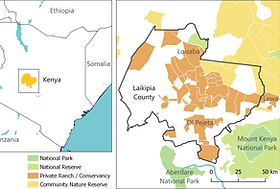
The Laikipia conservancies are a conservation success story, but the biodiversity, ecosystem health, and local livelihoods dependent on this important landscape are under threat due to high levels of human-wildlife conflict and unsustainable land practices in surrounding areas. In 2025, we continued addressing these issues through a series of initiatives that engaged 14 communities and 15 private conservancies.

This landscape supports one of the largest remaining lion populations in the world, as well as globally important populations of cheetahs and African wild dogs. In 2025, we worked with 13 villages bordering Ruaha National Park, implementing a variety of knowledge exchange, conflict mitigation and conservation incentive programmes.

There is intense human-carnivore conflict in this landscape, and a severe lack of data on lion population status. We conduct ecological research throughout Selous Game Reserve and Nyerere National Park. In 2025, we operated programmes across 11 villages and expanded our Community Camera Trap Plus (CCT+) programme to four villages.
Community Voices

"Since building this fortified boma, attacks on my livestock at night have stopped. Because my livestock are protected, they keep increasing in number. I can send my child to school, earn money to build my house, and provide food for my family."
Matambile Mgema, Pastoralist from Rungwa-Ruaha
2025 Impact in Numbers
7,727
37
119,161
heads of livestock protected through improved livestock enclosures
large carnivores monitored using GPS collars, generating 1,535 alerts
km patrolled by community liaisons providing direct support to communities
645
5
22
human-wildlife conflict incidents responded to
lion hunts prevented
villages received benefits through CCT+ across three landscapes
2,300+
16+
2
people engaged through structured conservation education and training
peer-reviewed scientific papers published
ecological monitoring surveys conducted
US$
65,000+
in community benefits distributed
Our Research in 2025
Good conservation requires good data
Our research provides insights and a foundation on which Lion Landscapes’ conservation programmes are built. By monitoring our outputs alongside ecological data, human attitudes and behaviour changes, and tracking patterns of human-wildlife conflict across the landscapes, we gather evidence needed to understand what is working, where the pressures are greatest, and how we can best support both wildlife and the communities living alongside them.

_JPG.jpg)
We are affiliated with Oxford University’s Wildlife Conservation Research Unit (WildCRU), which plays a key role in our research.
16
scientific
publications
4
international conferences
17 PhD
supported with their research in our landscapes and beyond
5 MSc students
Thank you · Asante sana · Ashe oleng
To every donor, partner and community member. When you support Lion Landscapes, you’re contributing to a future where people and wildlife thrive.